 Efficient Intelligence Group
Research
We study efficient intelligence across algorithms, architectures, circuits, and embedded systems.
Models ↔ systems
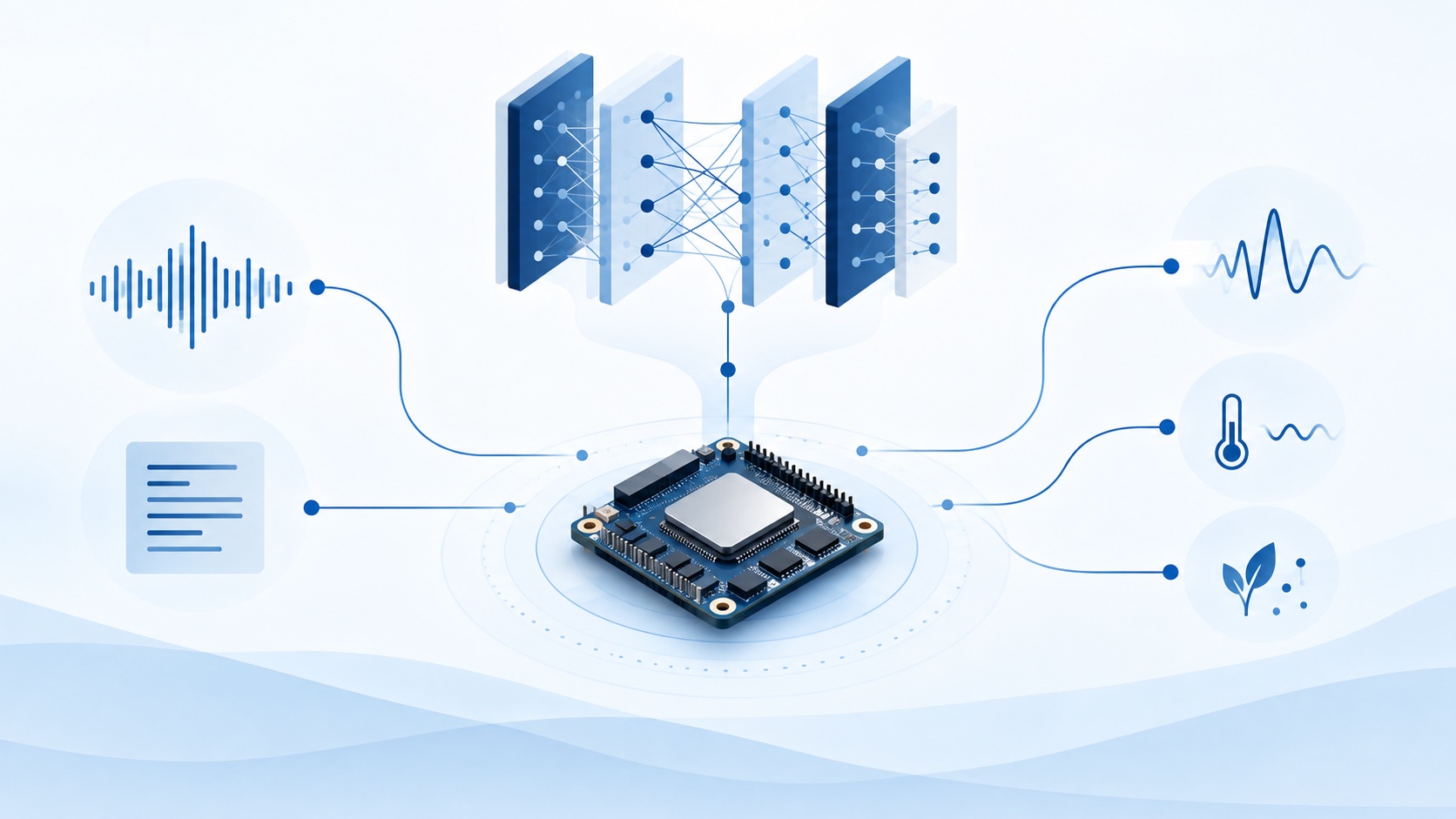
Low-Power Edge AI
Compact models and hardware–software co-design for intelligence on resource-constrained devices.
We investigate efficient large language models, vision–language models, and neural networks that can operate with low latency and limited energy, memory, and compute. Our work connects model compression and adaptive inference with custom accelerators and embedded platforms.
- Efficient LLMs
- Model compression
- FPGA acceleration
- Hardware–software co-design
Applications: Portable speech systems, rehabilitation tools, robotics, and extended reality
Sense and compute sparsely
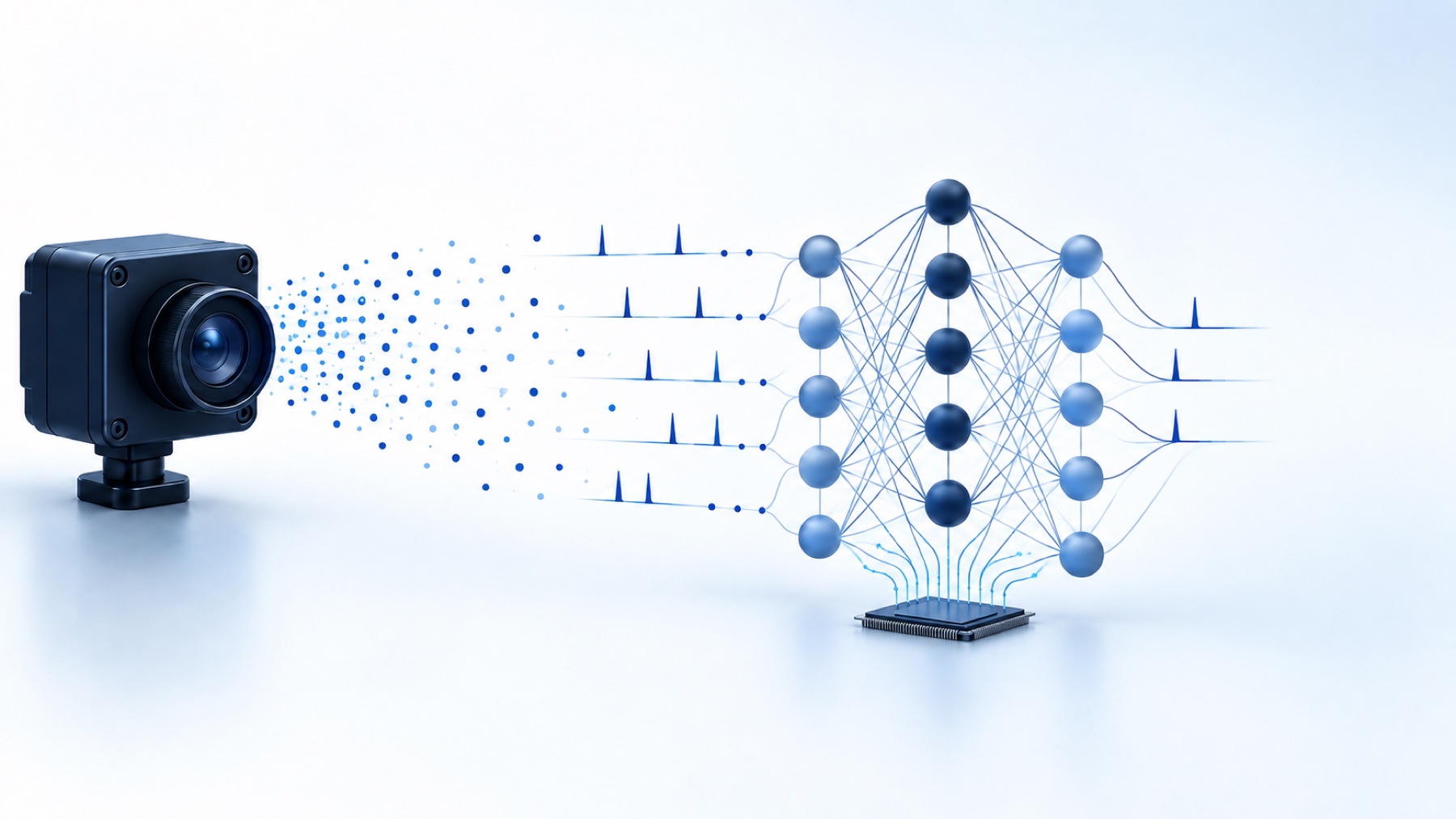
Neuromorphic Sensing and Computing
Brain-inspired sensing, algorithms, architectures, and circuits built around sparse computation.
We draw inspiration from neural dynamics and event-based sensing to develop energy-efficient intelligent systems. The group works across event-based signal processing, spiking algorithms, digital architectures, processor design, and emerging hardware technologies.
- Spiking neural networks
- Temporal sparsity
- Event-based sensing and processing
- Custom circuits
Applications: Always-on sensing, extended reality, robotics, and responsive edge intelligence
AI for health
Efficient Bio-signal Processing Systems
Efficient learning from EEG, EMG, speech, and multimodal physiological signals.
We develop robust and lightweight models for complex physiological signals, together with neuromorphic and embedded implementations. The goal is real-time processing that can move closer to patients and everyday healthcare settings.
- EEG & EMG
- Speech intelligence
- Sensor fusion
- Adaptive learning
Applications: Seizure prediction, auditory attention, monitoring, and rehabilitation

Publications
Browse selected papers from the group or view the complete record on Google Scholar.